Adding the night sky and sound

Add the sky

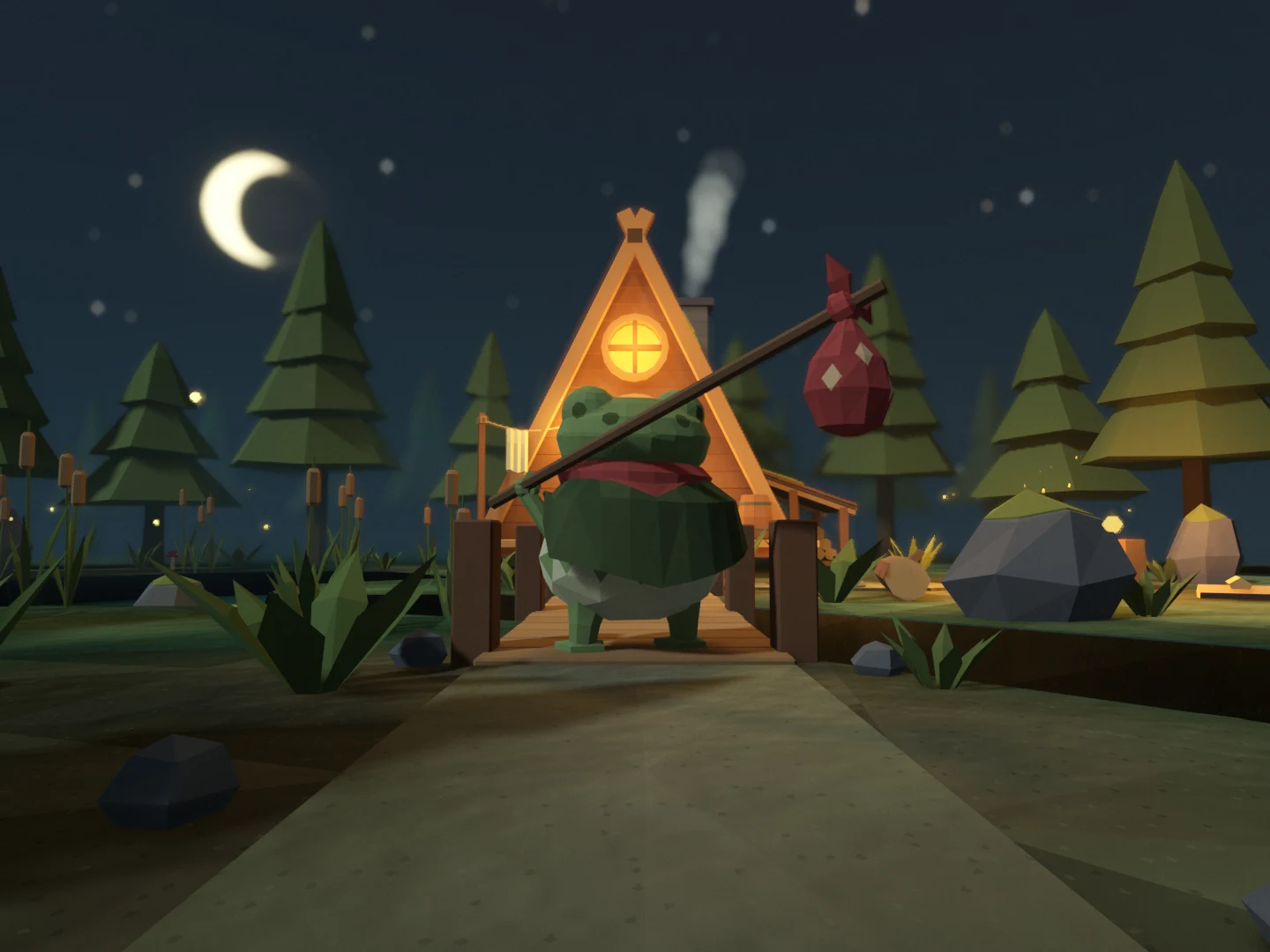
The clearing already had cabin lighting, a campfire, and moving effects. The next pass added a dark sky, scattered stars, and a crescent moon. The sky followed world direction as the camera moved, with trees and the cabin naturally blocking the view.

We kept the existing scene geometry and gameplay while adding this background.

Adjust what stays sharp

During review, the background blur started too close to Bog Frog. We moved its start farther behind him so more of the nearby ground, cabin, and trees remained clear. The first-person view used its own distance setting.

We also increased the grain and color treatment slightly. Both remained optional, so we could compare the result during play.

Add sound and playtest

We created a looping creek-and-cricket soundscape and added it to the game. It fades in, can be muted, and pauses when the game loses focus.

The final playtest used the updated focus, sky, and ambience together. That was the version we kept at the end of the session. It was still a small walkabout, with the character, scene, movement, and sound now working together.

We also did…

  • Added invisible shoreline and map-edge barriers, keeping the bridge open.
  • Removed sprint and retained the brisk default walk.
  • Saved the reviewed version and a handoff for the next session.

Finding the waddle

Build 03 movement study, before the night sky and sound pass.

Replace the fixed pose

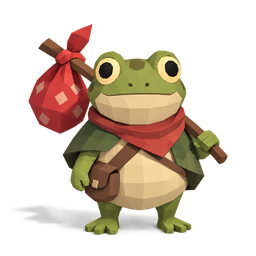
The first playable frog could move, but his body stayed still. We rigged him and added idle, walking, running, and airborne poses. Short steps and alternating weight shifts gave the movement its basic waddle.

The cape, scarf, and bundle moved with him. His carrying hand needed to stay connected to the staff throughout the motion.

Rework the pace

The first walk was too slow for the next pass. We increased the default pace from 1.8 to 2.9 metres per second and reauthored the stride to match. Compact steps, a small bound, and belly rebound replaced simply speeding up the old animation.

We also sharpened stopping and reversing. The animation timing followed actual movement after collisions, so pushing into an obstacle did not keep the feet cycling at full travel speed.

Keep the camera steady

The body could bounce; the camera did not need to copy it. We made it follow the stable player position rather than the animated spine. Gentle stick input selected a slower stroll, while full input used the brisk walk.

This gave us a controllable waddle to playtest through the clearing. Terrain-aware foot placement remained for later.

We also did…

  • Kept stride timing through changes of gait.
  • Checked the carrying pose and staff connection.
  • Retained the existing water, smoke, embers, and firefly effects.