First Game Done!
I’m done with Bog Frog 1.0! I learned so much making this game, and I built it entirely with AI. I want to make another game soon.
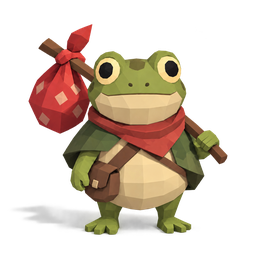 Bog Frog Log
I’m done with Bog Frog 1.0! I learned so much making this game, and I built it entirely with AI. I want to make another game soon.
I had a playable route through the island. Next I wanted a Mac app I could open and test on its own.
Fullscreen exposed extra work: the game was rendering more pixels as the window grew. I fixed the internal resolution at 1600 × 900 and let it scale to the display. I also removed a second layer of anti-aliasing while keeping temporal anti-aliasing, fog, shadows, and lighting.
The first exported app still stalled while preparing graphics. I changed how it loads those resources, then checked the packaged app separately from the editor.
I replaced the temporary splash with a distant island view. A small waterfall loop runs beside the Loading artwork while the world prepares. The cover dissolves into the same live view, then the camera moves toward Frog.
I added the Bog Frog app icon and packaged version 0.1.2 for Apple silicon and Intel Macs. The extracted build passed its startup check; route and Replay checks passed too. The next step is playing this build outside the editor.
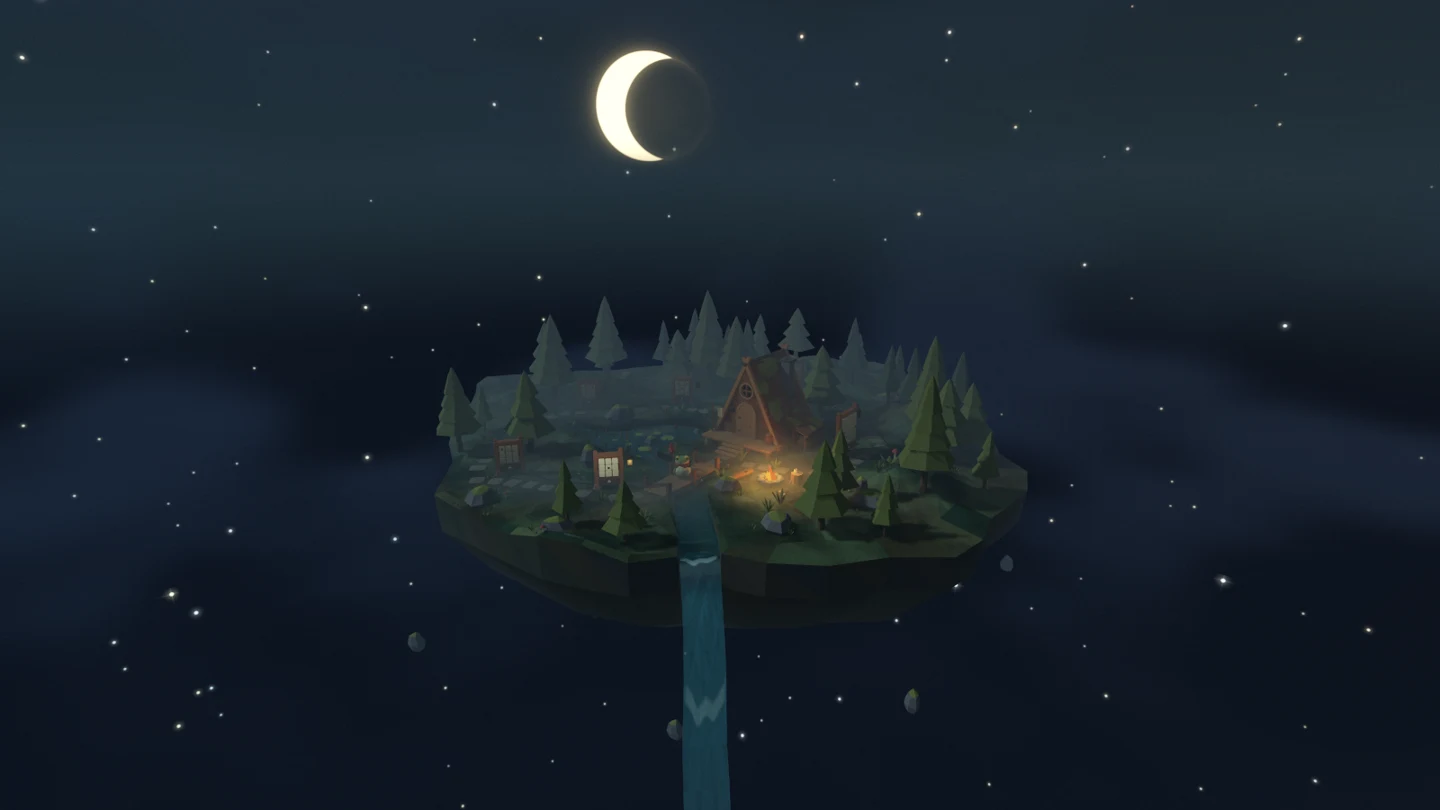
The stream reached the edge of the floating island. I added a waterfall that curls over the lip and drops below the rock base, keeping the same dark teal water as the pond.
The first pass had a broad opening and a short tail. I narrowed the opening to fit between the banks, extended the drop, and gave the bottom a longer fade. The water now disappears into the sky without a hard cutoff.
I started with fine streaks down the falling water. Then I connected the highlights across the flat stream, the curved lip, and the drop. They needed to read as the same water moving through all three.
I made the highlights gather speed as they approached the edge, then stretch and accelerate on the way down. Small geometric droplets break away near the lip.
I tried pale, wavy bands across the water. The first shapes were too jagged, so I softened them while keeping the darker water underneath.
I preferred that version. I made the bands a little more frequent and increased their acceleration just below the cliff. I also moved the start of the lower fade upward, keeping the long tail.
The result is in the current game. I kept the earlier streak version as a saved checkpoint so I can return to it if needed.
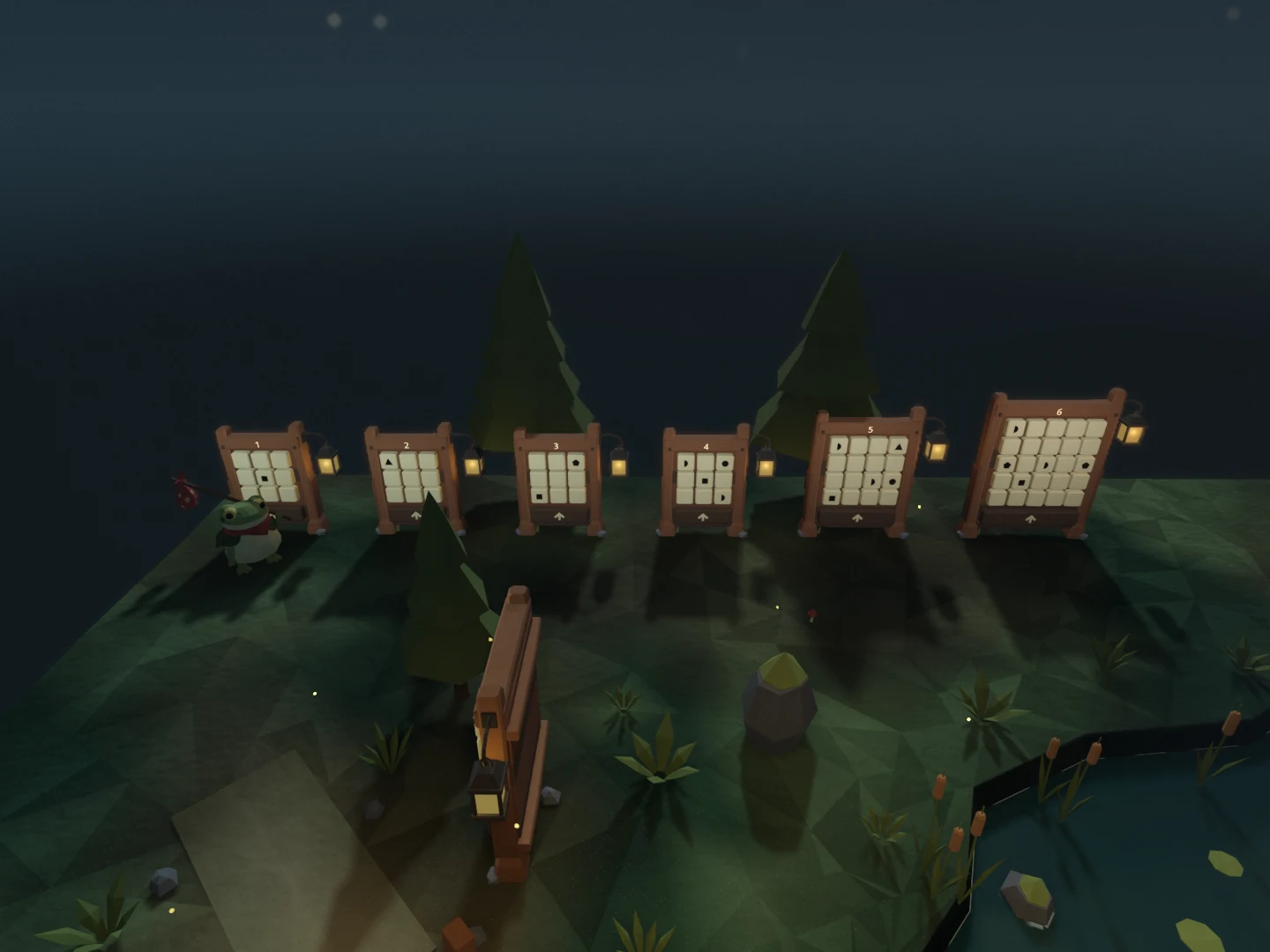
I had six working puzzles lined up along an edge. I wanted to turn them into a short game with a start, a route, and an ending.
I rebuilt the ground as a floating island and added a distant opening shot. The camera settles on Frog at the bridge. The wide view returns at the end.
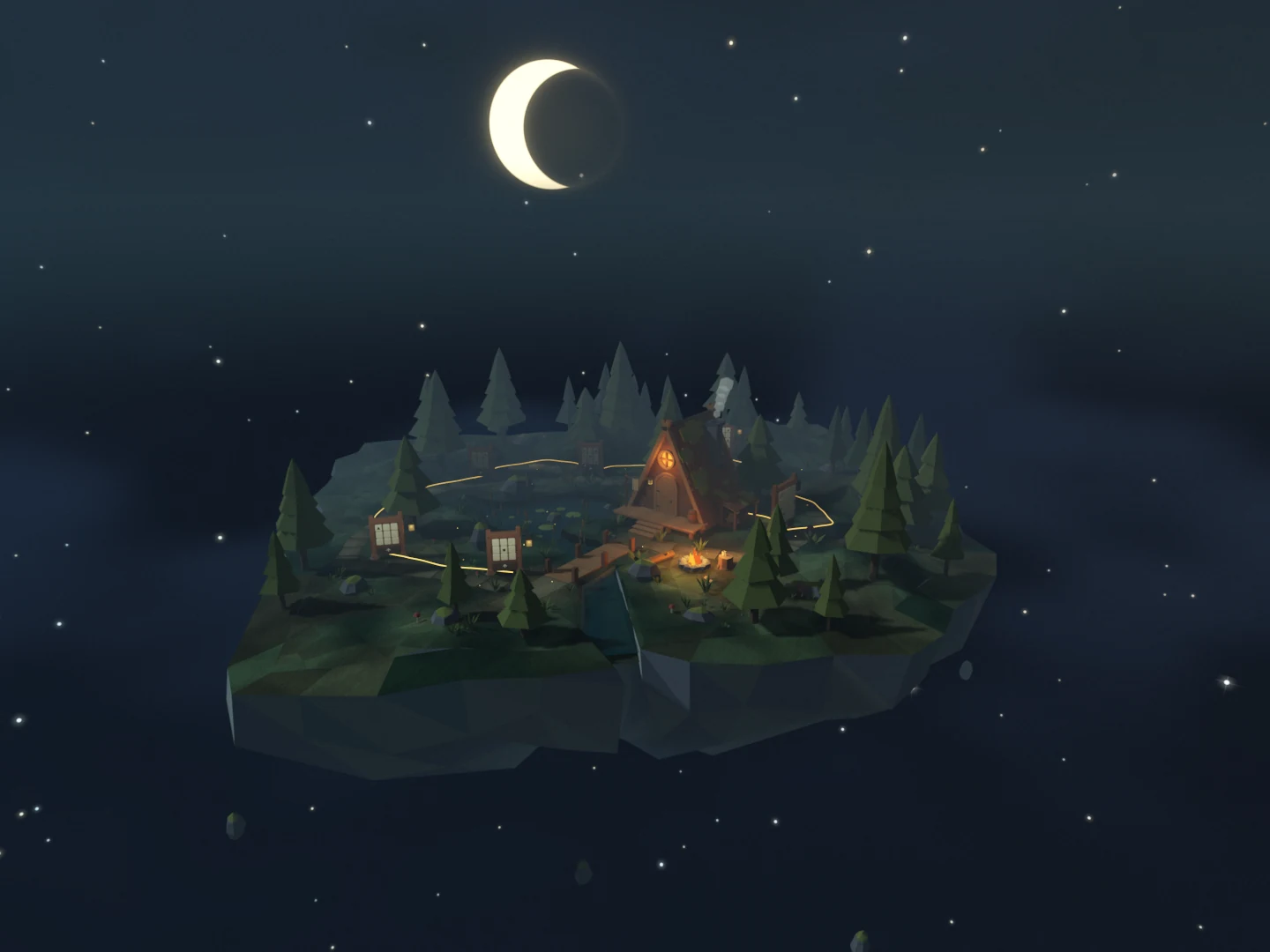
I spread the boards around the pond, through the trees, and behind the cabin. Curved cables connect them in order. Solving one sends a warm light along its cable and unlocks the next. Finished boards stay solved for that run.
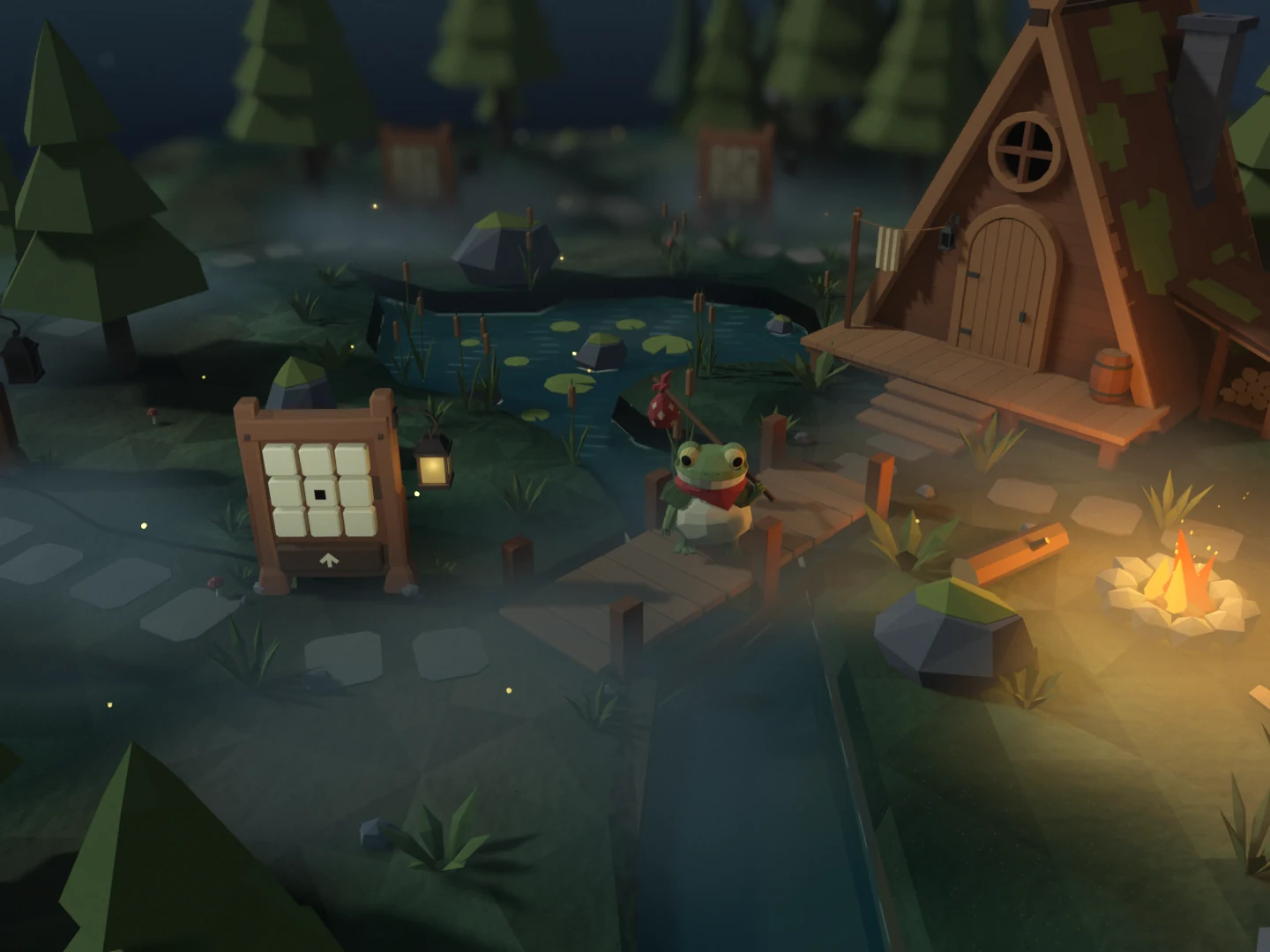
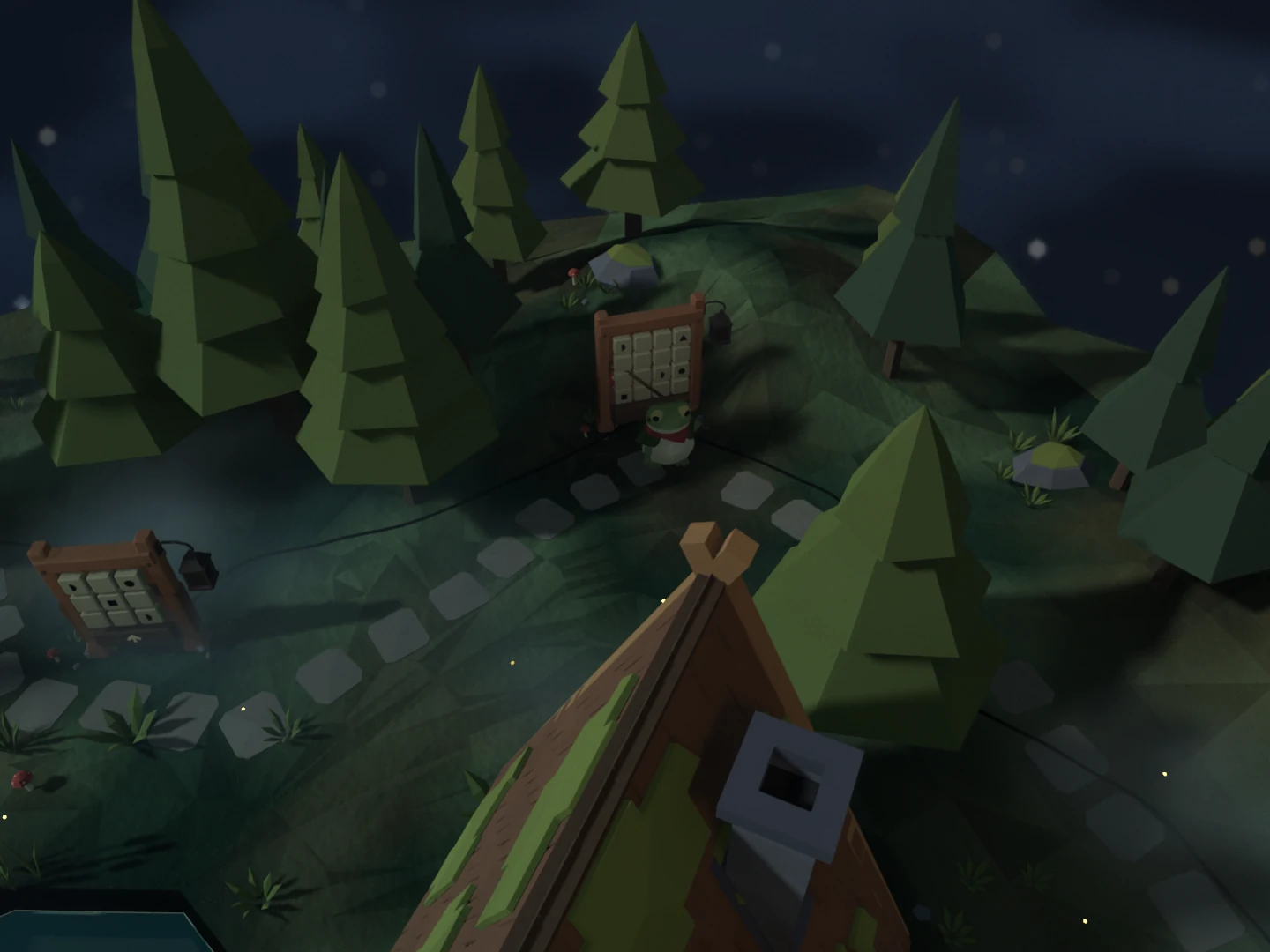
I replaced the follow-camera choices with fixed views for each part of the route. The bridge, pond bank, grove, and space behind the cabin each get their own framing. I can show the next board and its approach without asking the player to orbit the camera.
Views ease between positions as Frog crosses into the next area. Holding a direction keeps him walking the same way through the change; releasing and steering again uses the new view. Puzzle interactions still move in for a closer look.
I made the final solve power the cabin. Once the last cable reaches it, the upper window flickers, settles into a warm light, and the door swings open. Light appears through the first crack and fills the doorway. Then control returns to Frog.
I added one last step after restoring power: walk inside. Frog enters the cabin, the door closes, and chimney smoke starts. A quiet banjo loop plays as the camera pulls back to the island and moon.
The “Thanks for Playing” screen follows. Replay resets the puzzles, cables, and house, then starts the opening again. Frog gets home. I can do the whole trip again.
I also did…
I started with Ship Shape, my browser puzzle game. Its rules gave Bog Frog something to do beyond walking around: toggle tiles to form connected groups, with each shape asking for a specific group size. Both ON and OFF tiles count. A square needs four tiles in its group, with no other symbol sharing it.
The job was to bring those puzzles into the woodland as objects I could walk up to and use.
I explored wooden-panel concepts, then modeled a freestanding board in Blender. Cream tiles sat inside a timber frame, with a wide submit button below and a lantern on the side.
The first playtest exposed the details that needed work. I gave the posts more shape, hung the lantern from an iron hook, and moved Submit down. Tiny tile rotations and uneven spacing made the grid feel less machine-made.
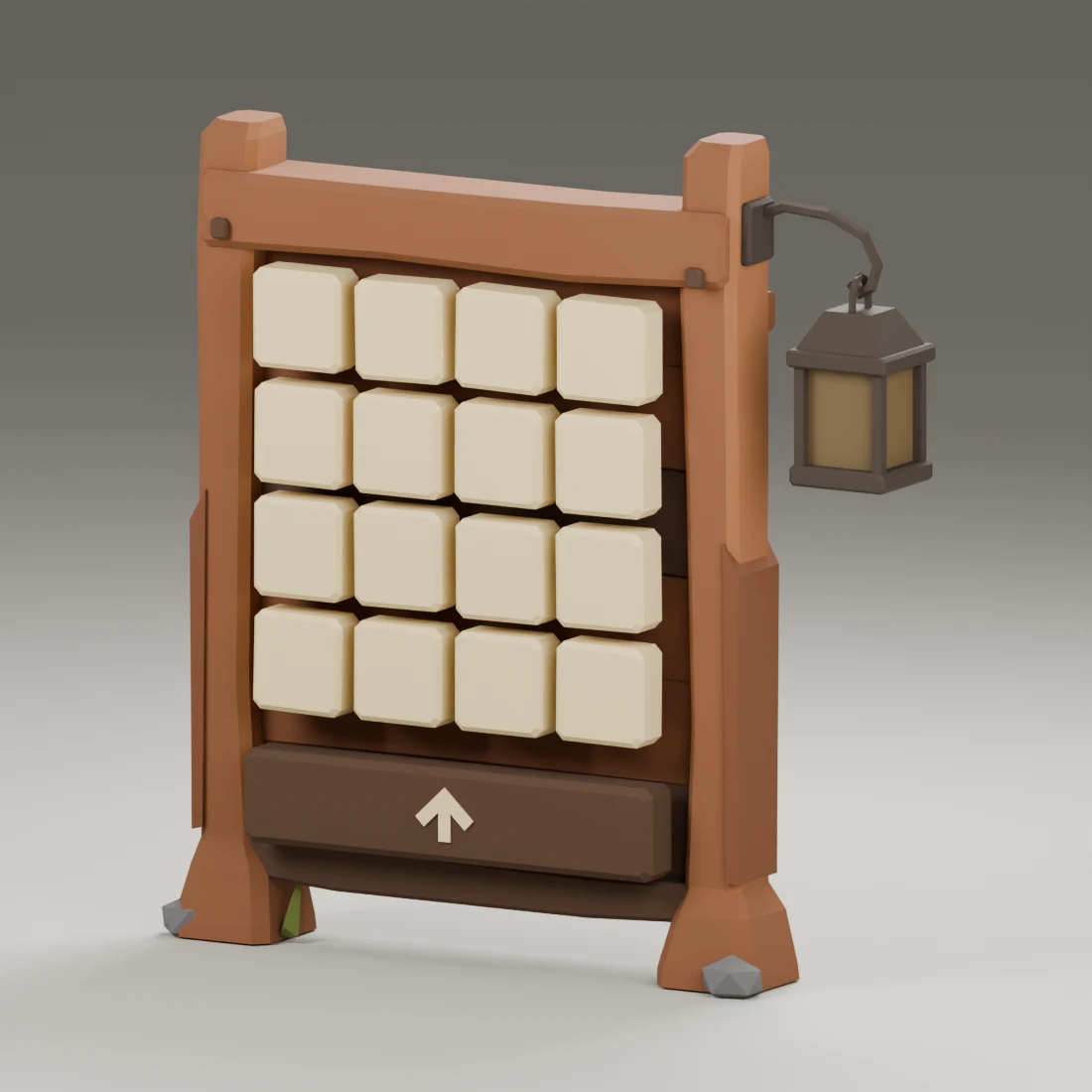
Interacting moves the camera toward the board and fades Bog Frog out of the way. Tiles depress on press and toggle on release. ON tiles glow soft white. I tried a subtle selection glow, but it disappeared against lit tiles, so I returned to chunky, slightly crooked corner marks.
Wrong answers ease the lantern red and mark only the unsatisfied symbols. A correct answer warms the lantern and plays an original banjo-and-bell jingle. The camera starts returning just before the tune ends.
I replaced the temporary test condition with Ship Shape’s actual rules and brought over its first six levels. The boards grew from 3×3 to 4×4 and 5×5, keeping the tiles and lanterns the same size.
I lined them up along the island edge and kept the original practice board by the bridge. All six can be tried immediately. Saving puzzle progress between sessions is still to come.
I also did…